
Every winter, after a fresh snowfall, we sometimes hear the same concern:
“Aren’t your goats cold? They’re covered in snow!”
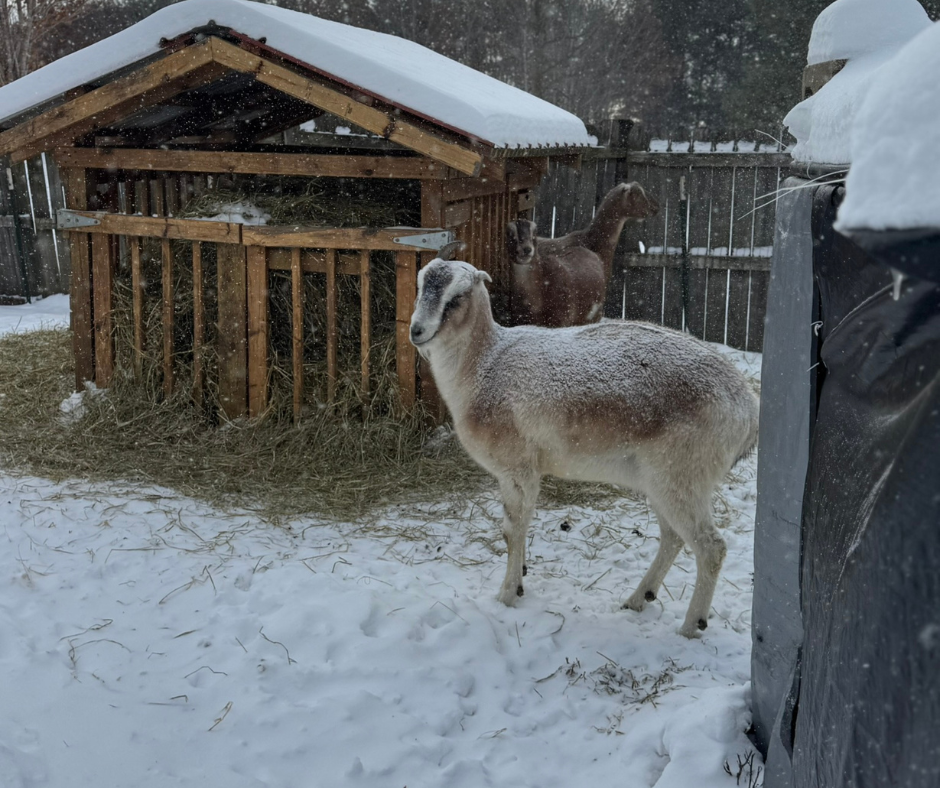
It’s a fair question—and one that comes from a good place. But the truth is, snow on a goat is usually a sign of a warm, healthy animal, not a cold one.
Here’s why.
Snow Is an Insulator
When you see snow resting on a goat’s back instead of melting right away, it means something important is happening: their body heat isn’t escaping.
Healthy goats grow thick winter coats designed to trap warmth close to their bodies. That coat acts as insulation, keeping heat in and cold out. Because the warmth stays near their skin, the snow on top doesn’t melt quickly—it just sits there like a fluffy blanket.
If a goat were actually cold or losing body heat, that snow would melt much faster.
A Healthy Winter Coat Makes All the Difference
As winter approaches, goats naturally grow a dense undercoat beneath their longer outer hair. This undercoat is what keeps them warm during cold temperatures, wind, and snow.
A good winter coat is a sign of:
- Proper nutrition
- Good overall health
- Low stress
- Appropriate shelter
Snow-covered goats are often just goats enjoying the weather—unbothered and perfectly comfortable.
Shelter Is Still Essential
While snow on a goat isn’t a problem, wet conditions and drafts are. That’s why our goats always have access to a dry, draft-free section of the barn where they can escape wind, freezing rain, and damp conditions.
They choose where they want to be. Some days, that’s curled up in deep straw bedding. Other days, it’s standing outside with snow collecting on their backs, completely content.
Warmth Comes From the Inside, Too
Another reason goats handle winter so well is nutrition. During cold months, our goats always have plenty of hay available, which helps keep them warm from the inside out. Digestion creates heat, so a well-fed goat stays warmer naturally.
Add fresh water and comfortable bedding, and you’ve got animals that are well-equipped for winter weather.
What Snowy Goats Tell Us
When we see our goats calmly grazing or lounging with snow dusting their coats, it tells us a lot:
- They’re healthy
- They’re well cared for
- Their bodies are doing exactly what they were designed to do
It might look surprising if you’re not used to farm life, but to us, it’s a reassuring sign that winter care is working just as it should.
Caring Well, In Every Season
Caring for our goats doesn’t stop when the temperatures drop. Winter simply changes how we care for them. That same attention and intention carries through everything we do on the farm—from daily chores to the goat milk soaps and lotions we make using their milk.
Healthy goats, cared for year-round, are the foundation of the products we’re proud to share with you.
Winter Care, From Our Goats to Your Skin
Just like our goats are built to handle winter with the right care and protection, our skin also needs a little extra support during the colder months. Cold air, wind, and dry indoor heat can strip moisture and leave skin feeling tight, dry, or uncomfortable.
The milk from our healthy, well-cared-for goats becomes the foundation of our goat milk soaps and lotions, made to gently cleanse and nourish skin—especially in winter. Goat milk is naturally moisturizing and soothing, making it a simple, natural option for hands, faces, and skin that need a little extra care this time of year.
From snow-dusted goats in the pasture to warm, comforting skincare at home, every step is rooted in thoughtful care—season after season.